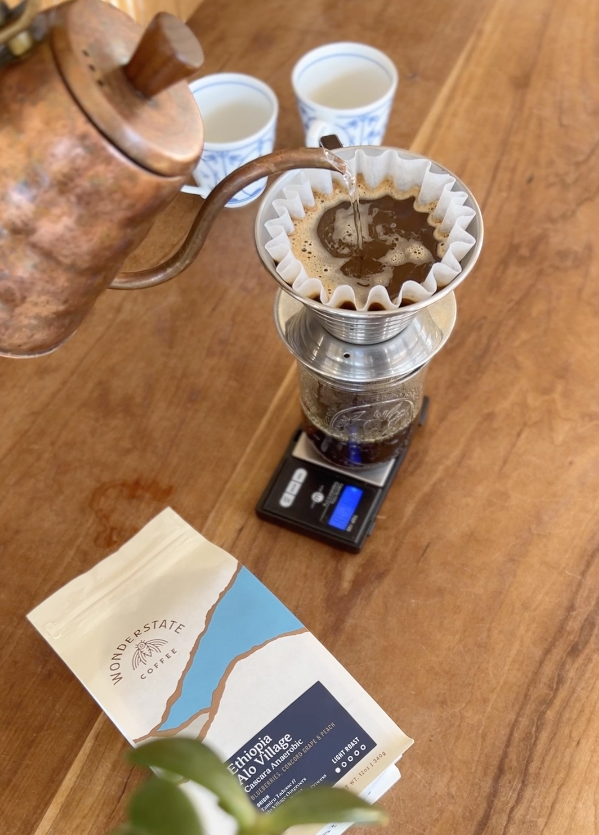
Brewing is a critical aspect of making great coffee. It is extremely important to follow a few basic guidelines related to water quality, temperature, equipment and grinding. Below is a list of general coffee brewing principles. For more specific brewing recommendations, please click on one of the brewing icons.
WATERExcellent coffee requires excellent water -- there's no way around it. Do not use distilled water; instead use filtered water, spring water, or Artesian well water. Minerals are important for coffee flavor so reverse osmosis water, while filtered, will not yield optimum results.
TEMPERATURECoffee tastes best when brewed between 195 and 205 degrees Fahrenheit. Most drip coffee makers don't quite hit this temperature. You can achieve this range on your stove by bringing water to a boil and letting it rest for a minute or two. Do not use boiling water -- it will cook the nuances out of the beans.
GRINDFor best results, we recommend a burr grinder because it produces a much more consistent grind (though a blade grinder is still preferable to pre-ground coffee). As a general rule, coffee should be ground finer for quick extractions like espresso, medium for the auto-drip method and coarser for slower extractions like the French press. Measure your coffee first before putting it into the grinder and only grind as much as you need per brew. Once the coffee is ground, its flavor will immediately begin to deteriorate.
STRENGTHA general rule of thumb is 2 rounded tablespoons, or 8 to 10 grams, per 6 ounces of water. If you like a weaker or stronger cup, adjust the amount of coffee you use, not the grind of your coffee. A grind that is too fine under a long extraction period will taste bitter and over-extracted, while a grind that is too coarse will taste weak and diluted. Remember that the full expression of the coffee will become most evident as the coffee reaches lukewarm temps, so drink slowly and appreciate your brew as it cools off. If it is too strong, or too weak, this is when you will taste it most.
STORAGECoffee should be stored in a dark, cool, dry place (like a kitchen cupboard). Our coffee cans are ideal storage vessels so feel free to use them throughout the season. The only time storing coffee in a freezer is appropriate is when you have more than a few weeks' supply. If you do use the freezer make sure to put the coffee in an airtight container.